
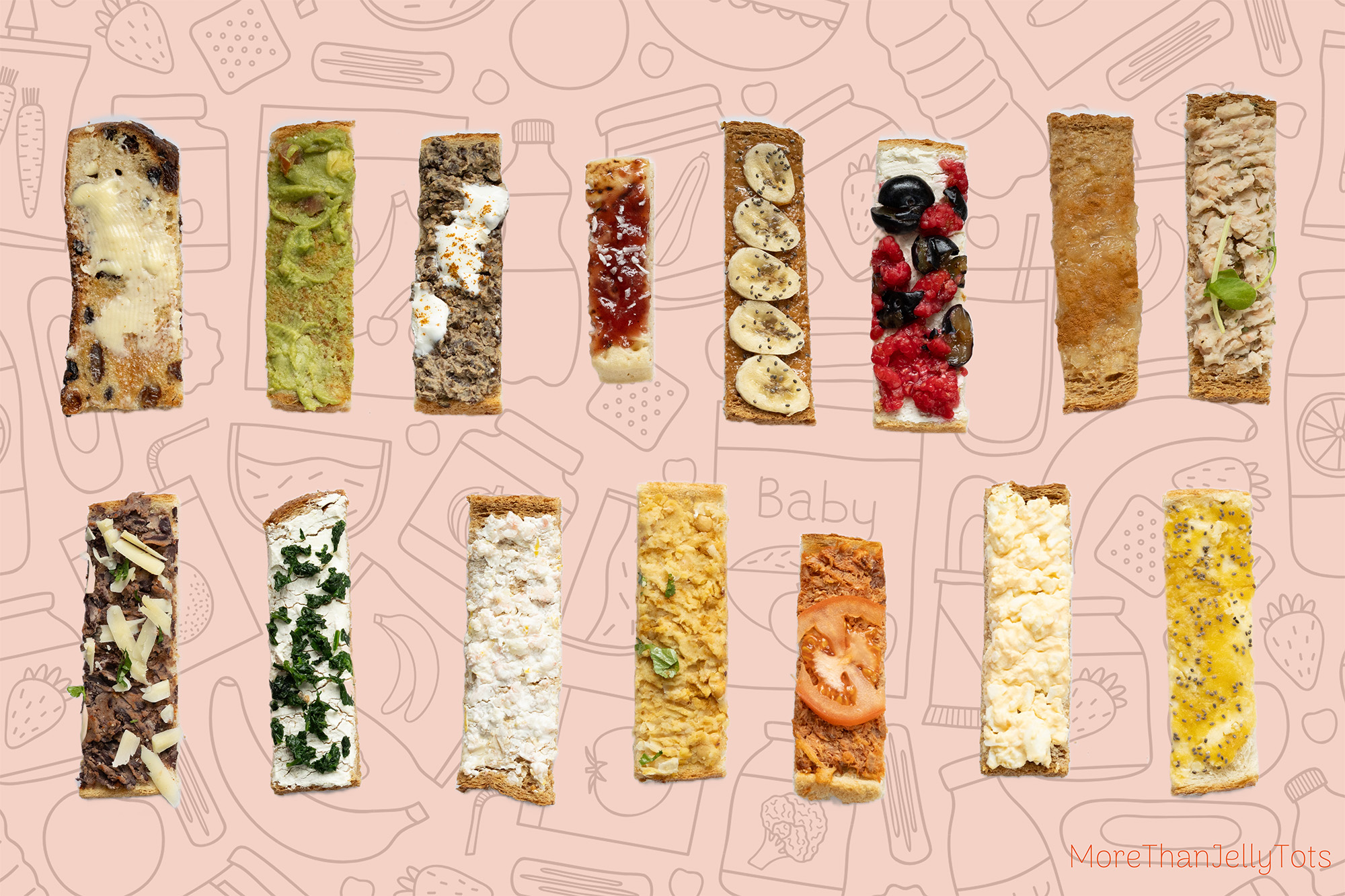
Looking for toast topping ideas for baby-led weaning? You’re in the right place! But wait—this isn’t just baby-led weaning toast—this humble food is a springboard into your baby’s culinary adventures!
And with you at their helm, they’re going to level up their skills on this delicious weaning food, get plenty of variety, and sample lots of exciting first tastes.
The beauty of baby-led feeding is just how informal and relaxed it can be, and toast is the perfect food to match with this ethos. You’ll see how easy it is to prepare toast for babies following baby-led weaning, it’s a doddle.
So buckle-up busy parents, I’m going to give you over one hundred ideas for baby-led weaning toast so you never get stuck with the same boring toppings over and over again.
And because our baby’s safety is the most important consideration, we’ll also look at choosing the right kind of bread, and how to prepare food safely when serving toast to your baby.
Why Baby-Led Weaning Toast?
Baby-led feeding and finger foods like toast give babies the perfect opportunity to practise their dexterity skills at every meal time!
Her little hand curled around the crust of toast, chewing slowly, taking it all in. Although it was the smallest milestone — her first cheese on toast — it felt like everything.
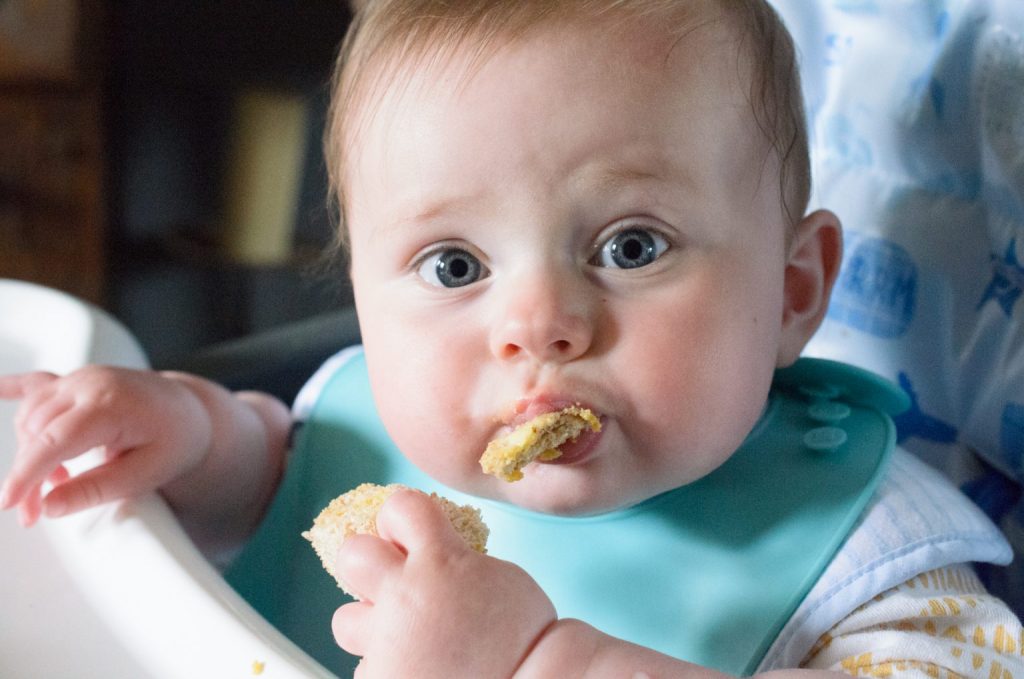
There’s no special equipment, you don’t need to cut the crusts off, and you don’t need any fancy special bread.
In fact, all you need is a toaster, a pretty wooden plate with loads of compartments (okay, of course you don’t need that, but it will look nice in photos!), and a little imagination to turn the everyday into something quite delicious and nutrient-dense.
A Note on Allergies
Food allergies are a worry when you start to wean your baby. You should always speak to your health visitor or doctor before you start weaning your little one. This is especially true if you have a history of allergies in the family or suspect your baby might be allergic to any foods.
Toast and its toppings often contain multiple potential allergens. For this reason, toast shouldn’t be one of the very first foods you introduce to your baby. Allergens should be introduced to your baby one by one, first (1) to observe for any reactions. Early exposure at 6 months is key. Repeated exposures after 6 months may help prevent peanut and egg allergies (2).
Common allergens for babies include: cow’s milk, eggs, peanuts, tree nuts, soy, wheat, fish, shellfish, sesame, and certain fruits and vegetables.
Celiac disease can appear in infancy once gluten-containing foods are introduced, which is something to be mindful of.
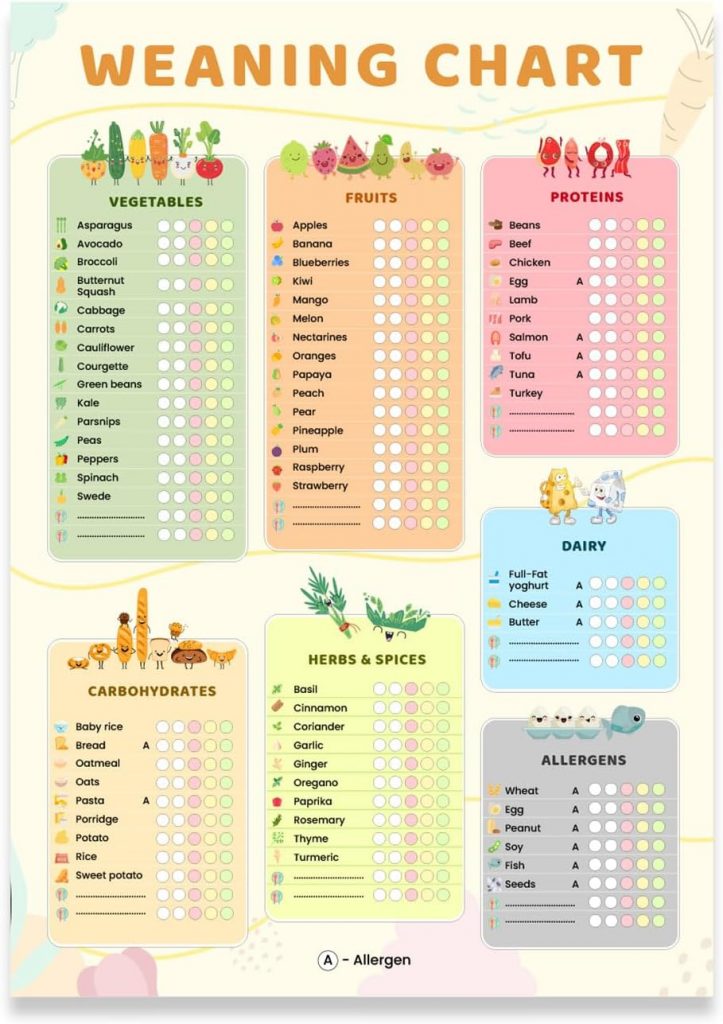
A weaning allergy or weaning first food chart can be a really helpful way to track what you’ve tried together and encourage you to try more. We love this simple and colourful weaning chart:
Now, let’s learn why you should make toast part of your baby’s weaning meal plan.
The Top 10 Benefits of Feeding Toast as a Finger Food
1. Easy to Prepare and Versatile
This is my favourite part about baby-led weaning toast—it’s so easy to prepare. Baby-led feeding toast is versatile, and I can make it practically anywhere without much equipment. I can easily modify an older kid’s meal to suit my weaning baby. Or, I can deconstruct an evening meal to suit my baby. This is so important to me, especially as a busy mum to four.
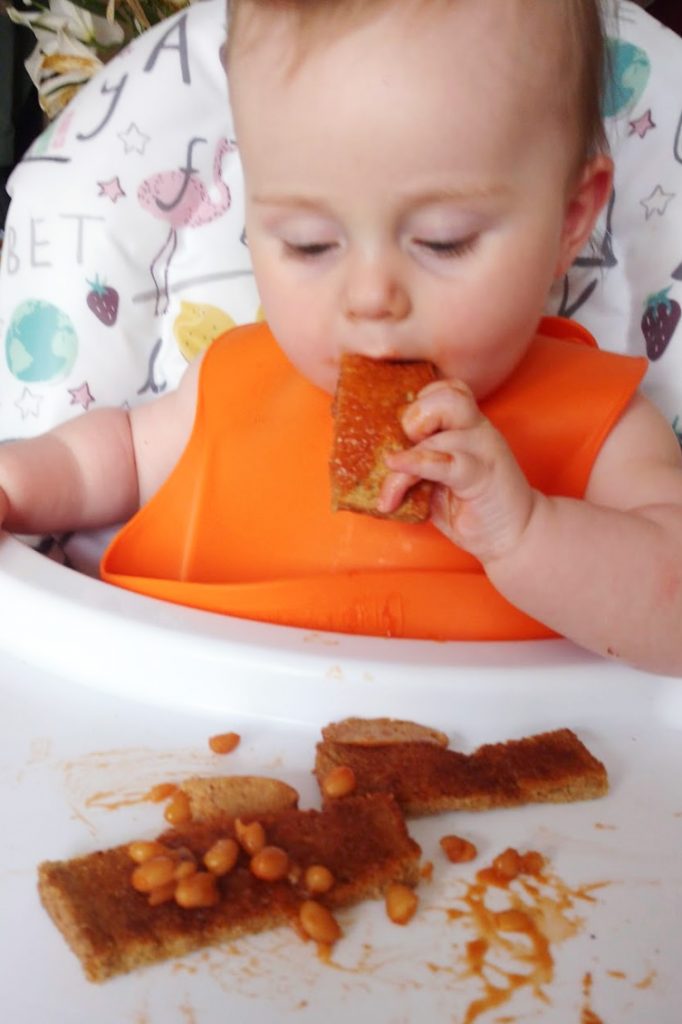
When it was just me and Jonah (my first), I had a lot more time to prepare really elaborate baby food. Not so much by the time my fourth, Eleanor, started weaning.
Speed and convenience are key, while ensuring they always get some solid nutrition in them at most meals.
2. Can Help Reduce Picky Eating Later On
Introducing a variety of foods early on can decrease the risk of picky eating. Evidence shows that at around age 6-9 months is a golden window where your child will be willing to try lots of new things (3).
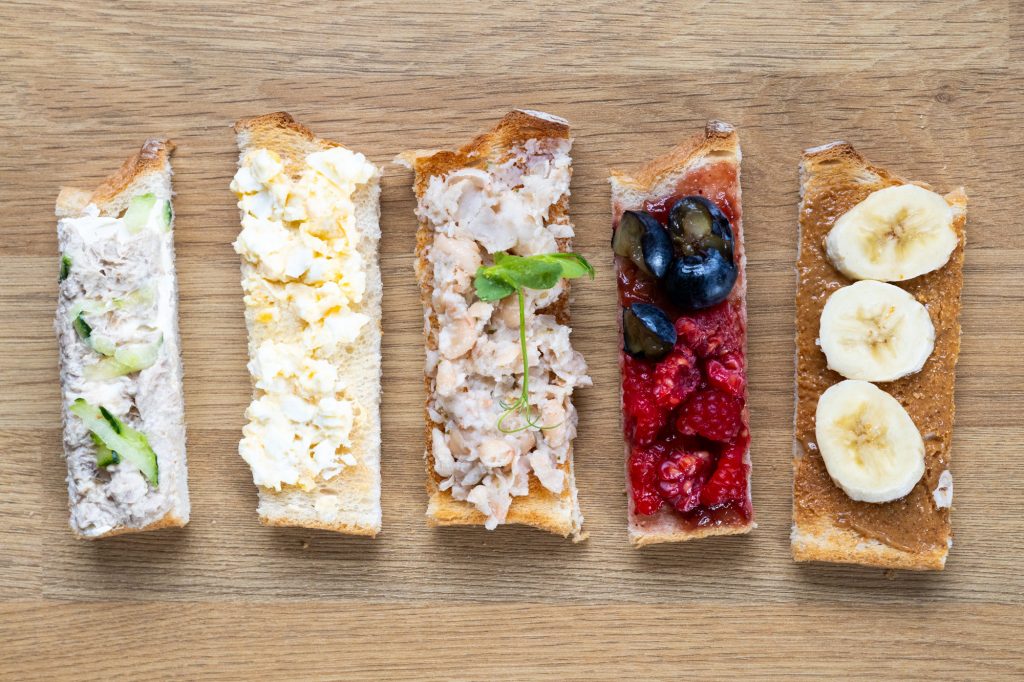
Take advantage of this by introducing them to many flavours. Toast helps to do this while making it easy for your baby to eat and taking the load off you when it comes to cooking!
3. A Base for Delicious Toppings Packed With Nutrition
Toast doesn’t have to lack nutrition. Whole grains can boost nutrition, and nutrient-dense foods like egg, avocado, nut butter, fruit, mashed beans, fish, meat, and other healthy toppings transform toast into a completely balanced meal. Importantly, toast is an affordable source of nutrition when paired with protein/calcium foods and fruit and vegetables.
4. Easy to Grip, Promotes Self-Feeding and Independence
Your little one will feel very capable when they try toast for the first time. It’s so easy for them to grip and move to their mouth with their hand. Their confidence will be boosted and they’ll feel ready to explore new food adventures.
5. Baby-Led Weaning Toast Is Fun!
Toast is so much fun, and it makes the best dippers when cut into toast strips! Dip it into yogurt, fruit, or cheese based dips. When your baby has perfected their picking-up skills, you can cut cute shapes like circles and hearts.
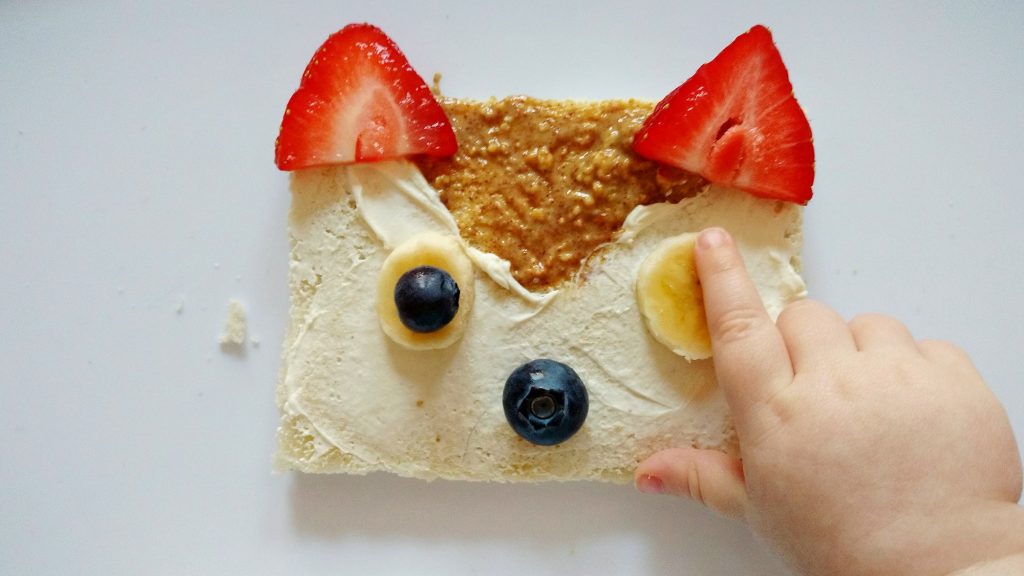
And wait for your baby’s delight when you present them with a fox or bear face made out of toast. You can also let your baby play with the food to make their own fun “faces”.
6. Your Baby Doesn’t Need Teeth to Practise Chewing
Toast has a rigid texture, and even babies without teeth can chew it. Babies have remarkably strong, firm gums, and they use them with their tongue to mash food against the roof of their mouth. With a variety of foods and plenty of texture, babies’ chewing skills improve every day!
7. Practise Dexterity and Hand-Eye Co-Ordination
Finger foods help your baby to practise their dexterity as they handle the toast and toppings. Their hand-eye co-ordination is given a mini workout each time they eat, because they must see the food, reach for it, adjust their grip, and then accurately bring it to their mouth.
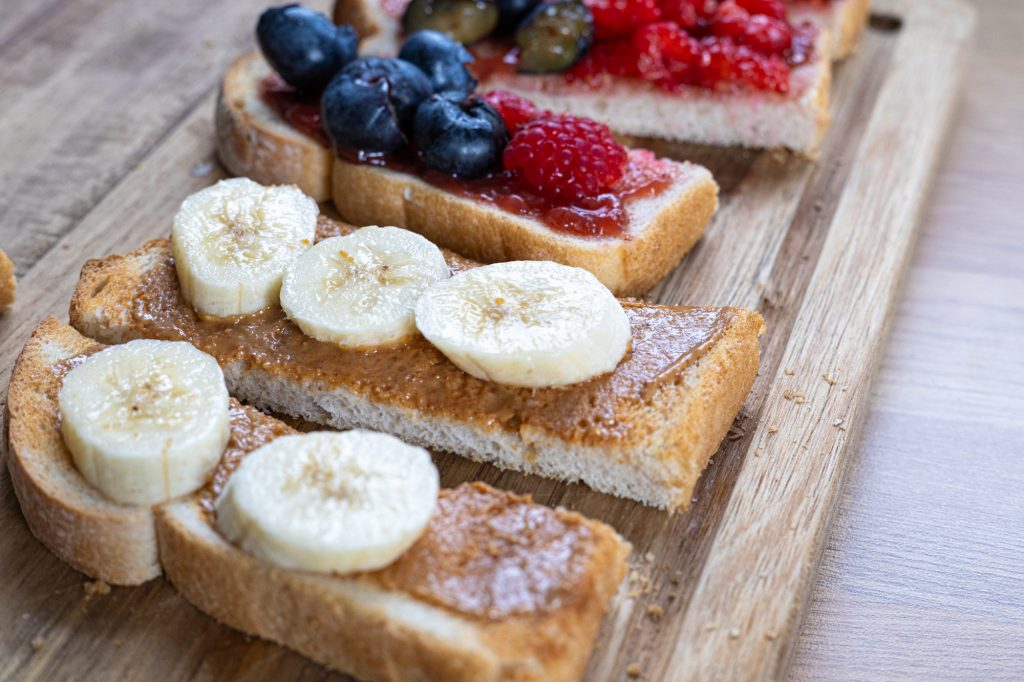
That’s quite the lesson in hand-eye co-ordination!
8. Improves Bi-Lateral Co-Ordination
Another skill to consider is bilateral co-ordination. Finger foods often require two hands—holding, tearing, and transferring food from one hand to another. This develops bilateral coordination, which is crucial for skills like scissor cutting, etc. It may seem far away now, but it comes around sooner than you think!
9. Helps Develop Fine Motor Skills
Finger foods are one of the most powerful, yet natural, ways to develop fine motor skills in babies.
When babies pick up small pieces of food, they begin using their thumb and index finger together—this is known as the pincer grasp and it’s a milestone most reach between 9 and 12 months.
10. A Safe Start From Which to Introduce New Flavours and Textures
Think of toast like a familiar safety rafter on their plate. It’s easy to introduce new foods if they’re served with something familiar, like toast. This works really well with toddlers who can be a lot more resistant to trying new things than six month old babies.
Now let’s look at the best time to introduce babies to toast.
When Can My Baby Have Toast?
Toast is a great food for babies following baby-led weaning, or traditional weaning with finger foods.
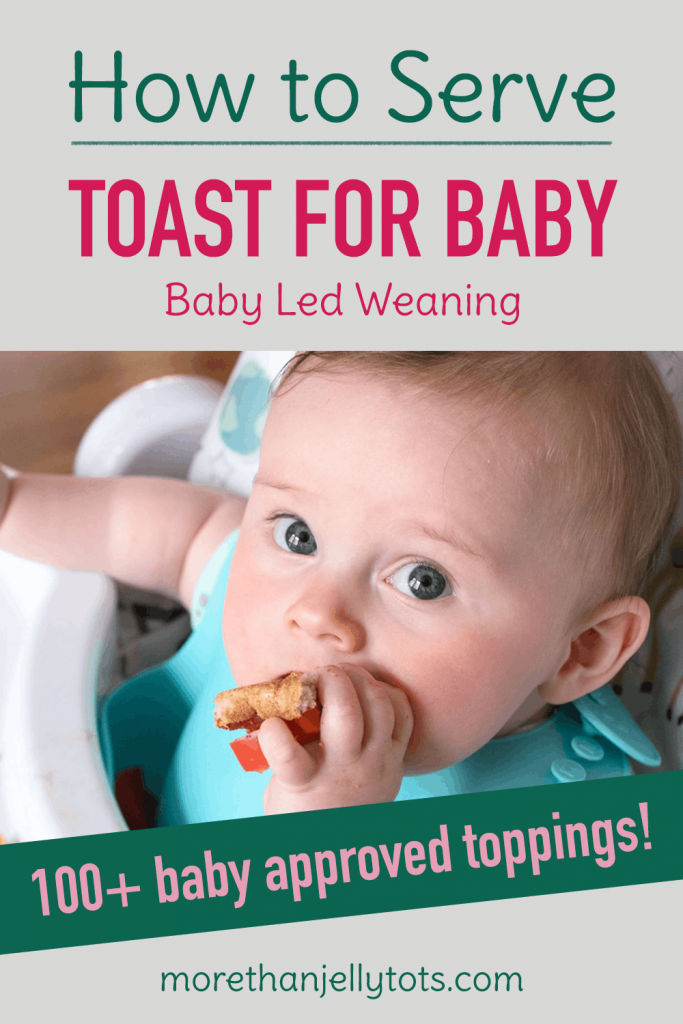
It’s fine to introduce toast from six months old, when you’ve decided to start your baby on solid foods, and your baby has shown the signs of readiness for weaning.
Most people start weaning with whole individual foods first, then introduce toast afterwards. I gave toast to my babies after first introducing the allergens within it one by one. We started with whole vegetables and fruit, followed by plain pasta (to test for wheat), Greek yogurt (dairy), and finally progressed to toast.
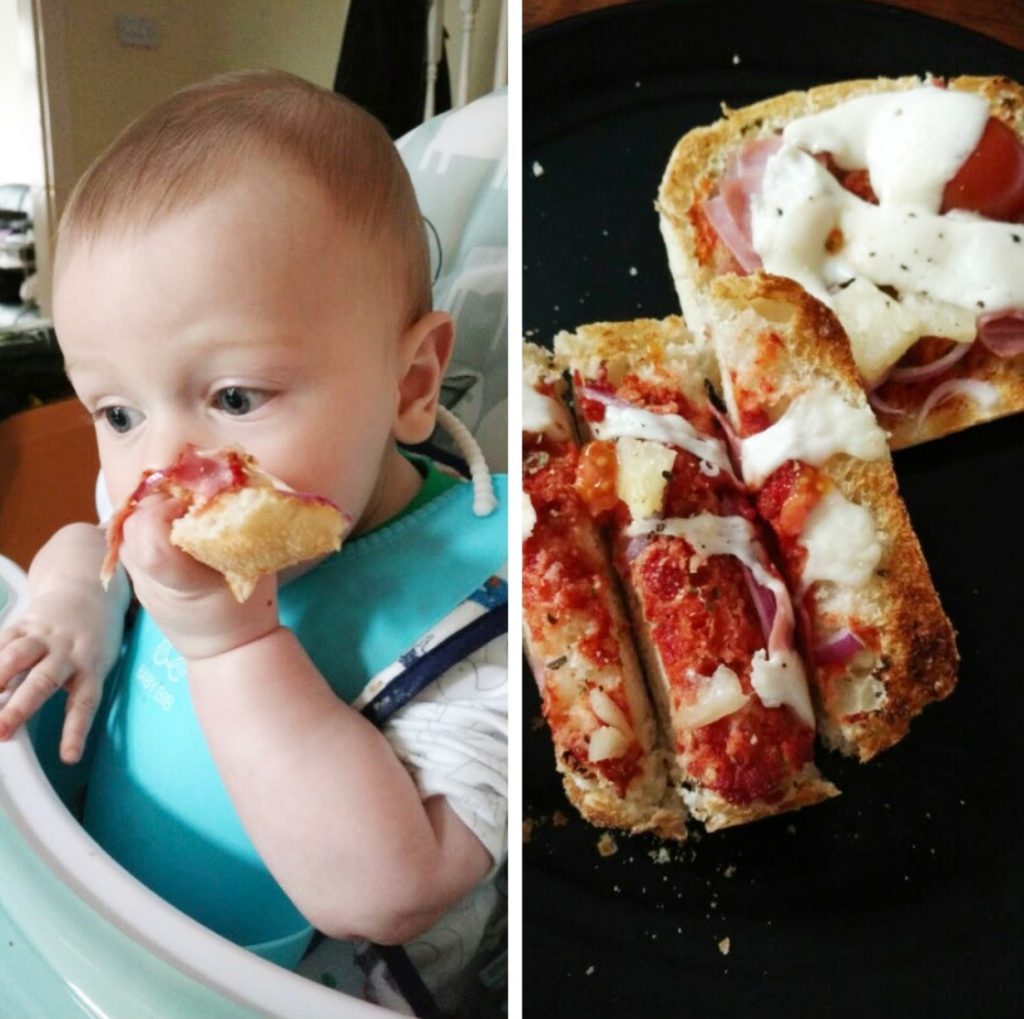
At this age, you might notice your baby starting to use their “palmar grasp” in a voluntary way to hold food and bring it to their mouth.
In time, your baby’s palmar grasp will give way to a pincer grip as her skills and abilities improve. It’s so exciting when you spot your baby trying to master this skill for the first time!
Now that we know our baby is ready for toast, let’s think about the best bread for your baby.
What’s the Best Bread for Baby-Led Weaning Toast?
Here’s how to choose the best bread for baby-led weaning toast.
- Lowest salt: Choose the lowest salt bread option you can find, since babies can’t have more than 1g salt per day.
- Lightly toasted: It’s easier to hold and eat, and it’s less likely to ball up and stick to the roof of the mouth like untoasted bread.
- No seeds at first. Larger seeds could pose a choking hazard.
- Lowest sugar: Or no added sugar, if possible. No honey.
- A variety of bread types: Always choosing wholemeal can fill up your baby too much.
Let’s look at this in greater detail.
1. Lowest Salt
The most important consideration when giving toast to babies is the salt content of the bread you choose.
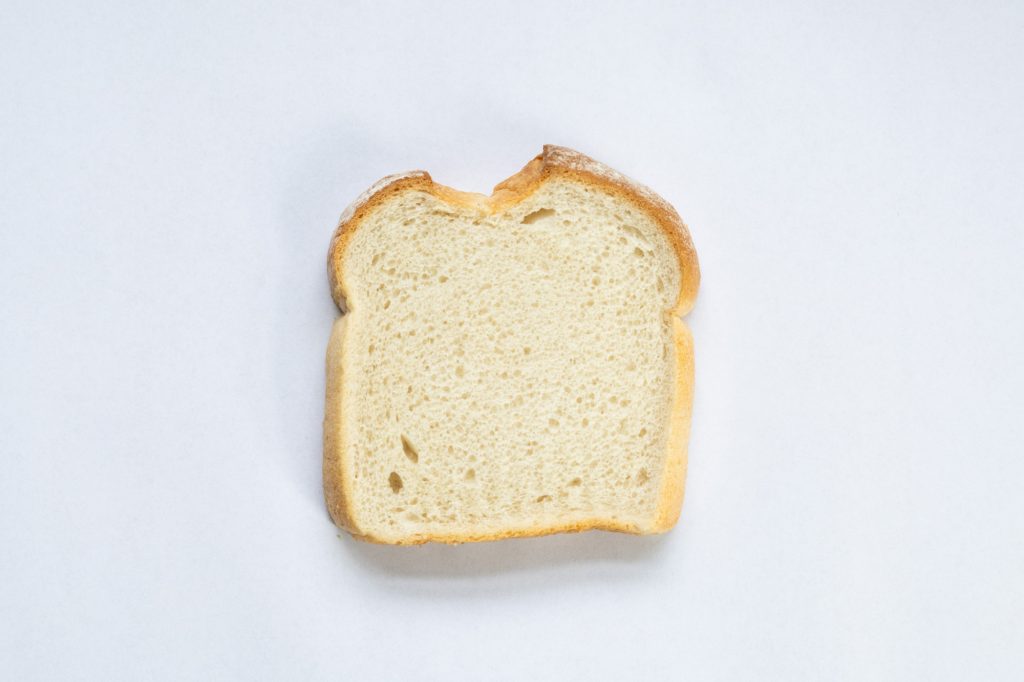
Your baby should have less than 1g of salt (0.4g sodium) per day. Too much salt can place an unhealthy load on a baby’s kidneys, that they cannot flush by drinking water.
Unfortunately, low salt bread options are limited in the UK. However, go for the lowest salt bread option you can find.
We took this pretty seriously with our first baby, and we went out and bought a cheap bread machine to make our own bread with no salt. We had a lot of fun making bread and it didn’t take much effort.
Nutritionists recommend looking for loaves with less than 0.12g to 0.14g salt per slice or less than 0.75g salt per 100g. However, you’ll find that most breads in the UK don’t fit this requirement. The best thing to do is to look for breads that have the lowest salt where you usually shop.
Bear in mind that your baby probably won’t eat a whole slice of toast in one sitting. And if you do feel like your baby had a lot of salt at the meal you served toast, then you can balance it out by limiting the sodium content at other meals on that day.
Here are some lower salt bread varieties in the UK and US. Always check the label for the most up to date nutrition information.
Lower Salt Bread Options in the UK
Choose the smaller sized loaf if possible.
Wholemeal Bread
| Salt per 100g | Salt per slice | |
| Sainsburys Wholemeal Medium 400g | 0.76g | 0.22g |
| Warburtons Wholemeal Medium 400g | 0.95g | 0.23g |
| Hovis Tasty Wholemeal Medium 400g | 0.90g | 0.26g |
White Bread
| Salt per 100g | Salt per slice | |
| Warburtons Milk Roll 400g | 0.95g | 0.17g |
| Warburtons Medium White 400g | 0.95g | 0.22g |
| ASDA White Medium 400g | 0.90g | 0.26g |
| Hovis White Medium 400g | 0.90g | 0.36g |
Lower Salt Bread Options in the US
Sprouted Bread
Sprouted breads are often recommended for babies since they have less salt and fewer additives. However, these types of bread are hard to find in UK supermarkets. If you’re in the UK and you’d like to try Food For Life breads, you can buy them online.
Here’s a quick comparison of breads:
| Salt per 100g | Salt per slice | |
| Food For Life Ezekiel Low Sodium Sprouted Grain 680g | 0.00g | 0.00g |
| Food For Life Ezekiel Sprouted Grain 680g | 0.59g | 0.20g |
| Silver Hills Sprouted Grain Little Big Bread 430g | 1.12g | 0.24g |
Other Breads
| Salt per 100g | Salt per slice | |
| Nature’s Own Homestyle White 340g | 0.80g | 0.19g |
| Dave’s Killer Bread Thin-Sliced White 581g | 0.85g | 0.24g |
| Dave’s Killer Bread Thin-Sliced Wholewheat 581g | 1.03g | 0.29g |
| Nature’s Harvest Whole Wheat Bread 340g | 1.03g | 0.29g |
2. Always Lightly Toasted Bread
Fresh bread has the tendency to ball up in the mouth and get stuck in the roof of the mouth. Toasting the bread lightly reduces the risk of this happening.
Your baby’s toast should look a bit like this:
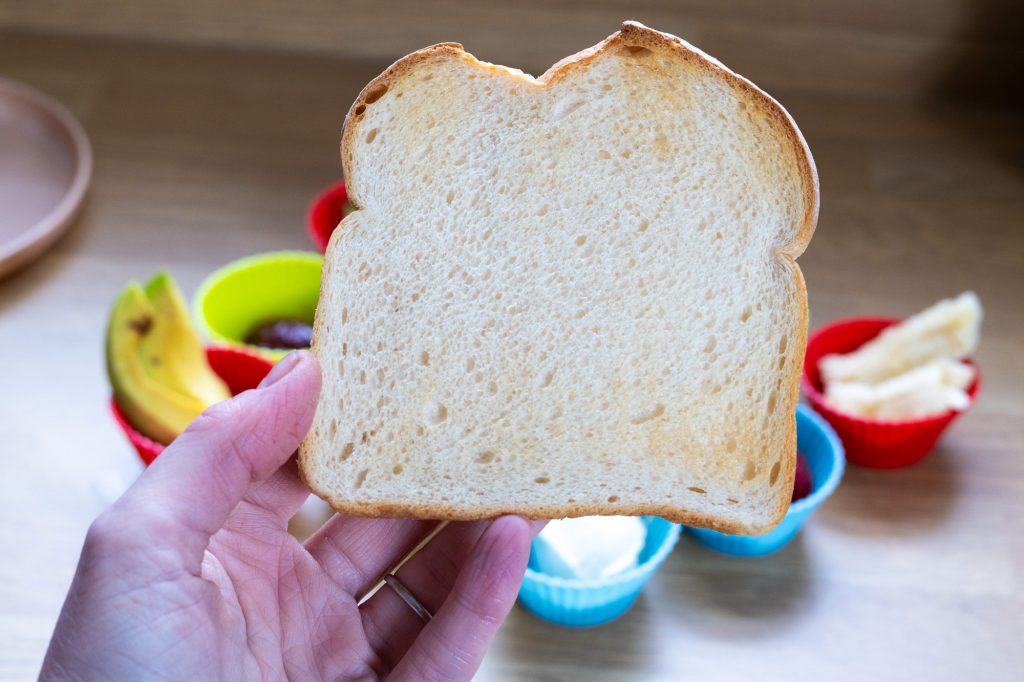
Bread that is slightly toasted is easy for babies to chew and doesn’t flop about too much while your baby is eating it. Use the lowest setting on your toaster to achieve the perfect level of toastiness.
3. Go for No Seeds
It makes sense not to start your baby on breads that contain large seeds. Hard seeds like sunflower, pumpkin, and flax could be inhaled or get stuck in a baby’s throat. From experience, most times babies handle seeds in bread well, but it can be a worry to you as a parent. So wait until they’re a little more experienced eating before introducing small seeds in bread.
4. Lowest Sugar
Choose breads that are made with no or little added sugar. Babies should avoid added sugars completely. Aim for 0-2g per slice or the lowest you can find.
Avoid added honey in breads due to the botulism risk it poses to children under 12 months.
5. Use a Variety of Breads
White or whole wheat bread? We know which is best for adults.
But believe it or not, it’s not always best to feed wholegrain or wholemeal bread to babies. This type of bread has high levels of fibre that can cause your little one’s tummy to become too full before they’ve taken in enough nutrition. Read more about this at the NHS website.
So mix it up with different types of bread. Look for low salt and low sugar varieties:
- White
- Brown
- Wholemeal
- Rye bread
- Fruit bread
- Pitta fingers
- Crumpet fingers
- Rye bread
- Bagel
- English muffin
And don’t discount harder breads like crusty bread and sourdough bread, since they’re less likely to ball up in a baby’s mouth. And, especially when toasted, they can make a great choice for older babies once they are confident chewing and swallowing.
How Baby Led Weaning Is Different
Before we get into the 100+ toast topping ideas for your baby, let’s have a think about how baby led weaning is different to traditional weaning.
Baby led weaning skips spoon feeding purees and lets babies self-feed soft finger foods from 6 months.
In baby led weaning, we do not start with smooth textures and gradually introduce lumps over time. Instead, we let the baby experience textures as they were meant to be experienced, within a safe boundary which matches with their ability.
Unless they have an underlying medical condition, your baby can absolutely handle texture in food. This is why you will find ideas for a variety of textures within my suggestions. This being said, you know your baby best—so feed them with textures you think they can cope with.
Keeping Your Baby Safe Following Baby Led Weaning
Your health visitor, paediatrician, or doctor is a great source of information when starting to wean your baby. They can give you all the information you need before you start baby led weaning.
I highly recommend buying and reading Gill Rapley’s baby led weaning book. If you’re unsure about BLW, it will fill you with confidence that it’s right for you—and that your baby is so capable!
We followed it with my first baby, Jonah, who is ASD, dyspraxic, and has gross motor difficulties. He has a super sensitive gag reflex, yet despite this he still got so much out of baby led weaning. I can’t imagine weaning any other way!
Here are some quick safety tips:
Use the Squish Test
Food should be served appropriately soft for babies, so that they can mash it with their gums using their tongue and the roof of their mouth.
Press the food between your thumb and forefinger. If it mashed easily, it is safe.
Learn How to Prepare and Serve Your Baby’s Food
Familiarise yourself with the correct way to serve your baby’s food—this guide from Solid Starts is really helpful.
The Difference Between Choking and Gagging
Gagging is normal while your baby is learning to eat for the first time. Learn the difference between choking and gagging.
Toast Topping Ideas for Babies
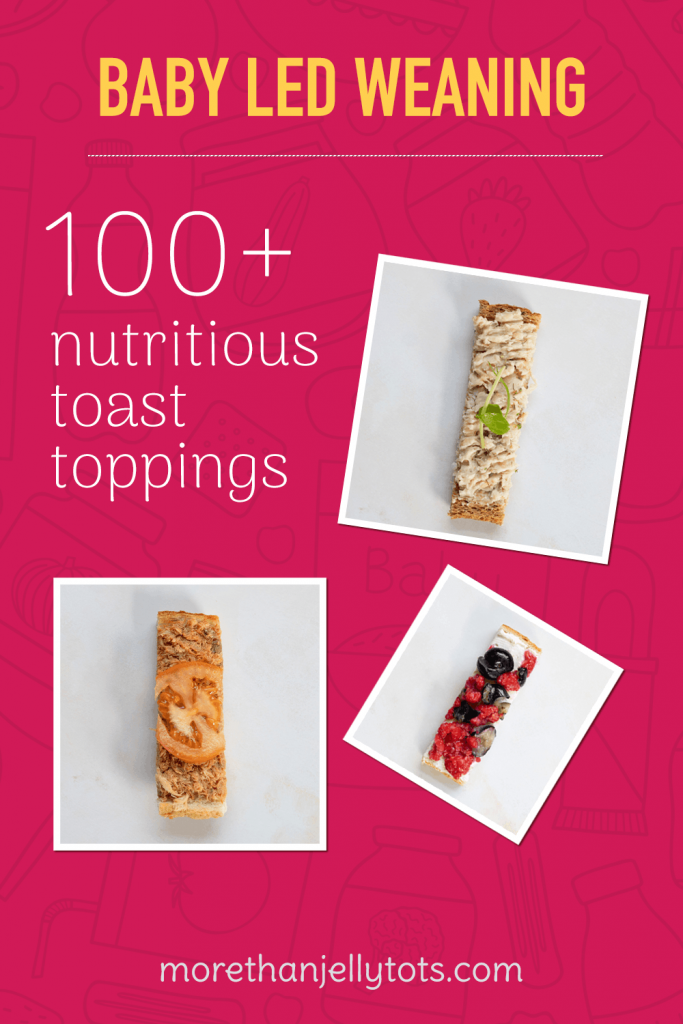
Here are my toast topping ideas for babies following baby-led weaning. I like to use unsalted butter, Greek yogurt, peanut butter, seed butters, fruit spread, or cream cheese to secure the toppings.
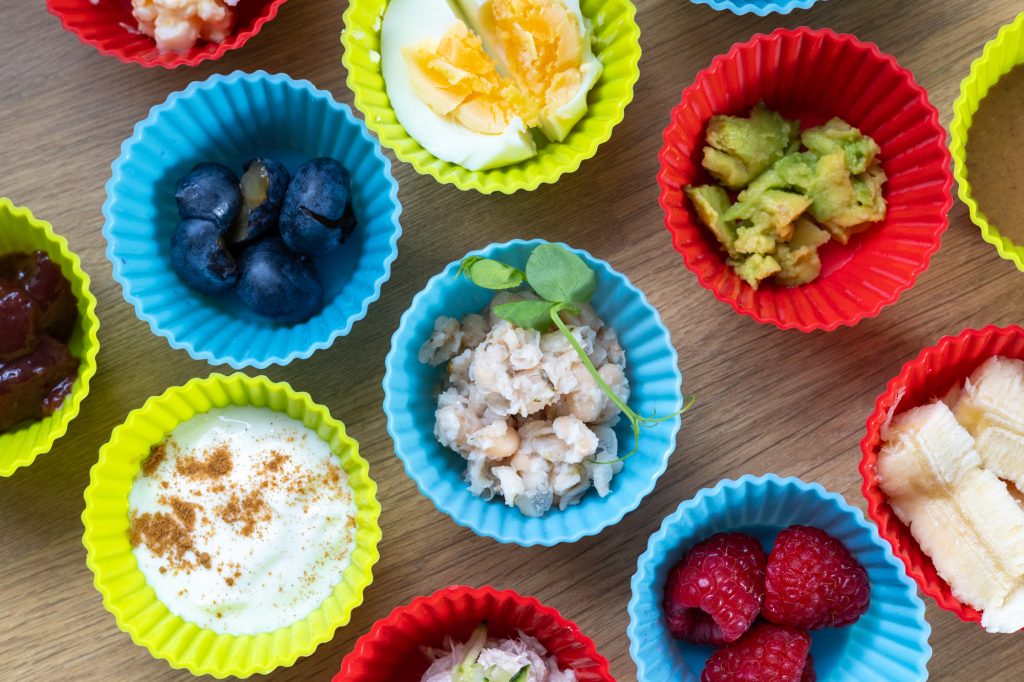
The Best Toast Toppings for Your Baby
Real Unsalted Butter
Let your baby appreciate the deliciousness that is pure butter! Choose fresh, good quality unsalted butter.
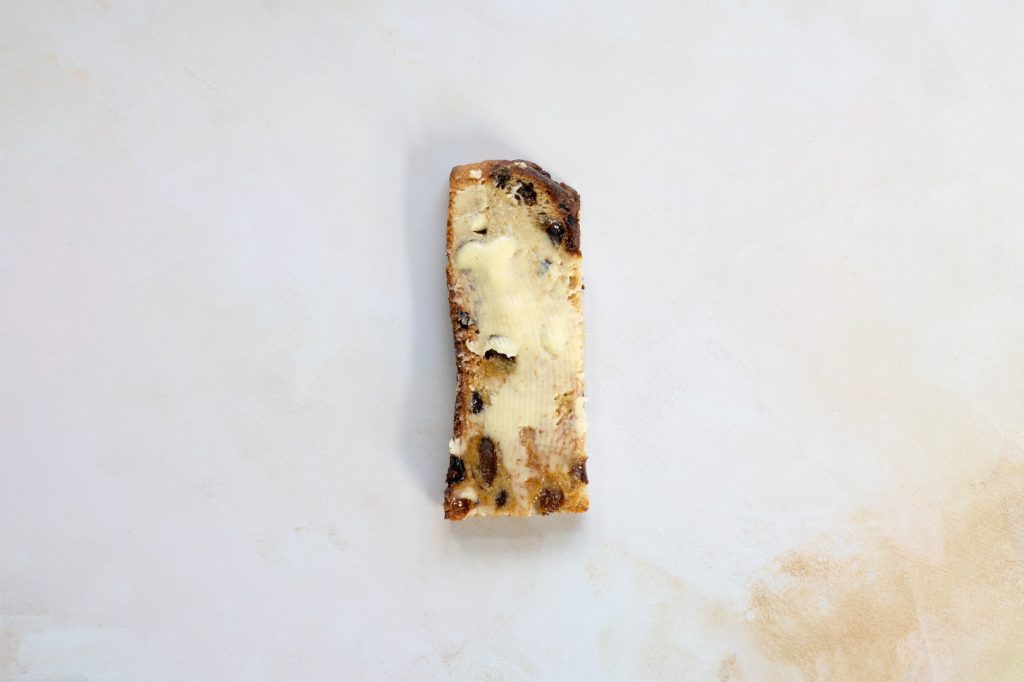
Butter contains essential fat-soluble vitamins (A, D, E, and K2), and healthy fatty acids like Conjugated Linoleic Acid (CLA) which support a healthy immune system, bone health, and metabolism.
Nut Butters and Seed Butters
Nut and seed butters make a fantastic choice for your baby from six months. Nuts are packed with protein, fibre, B vitamins, and vitamin E; and they taste delicious in butters!
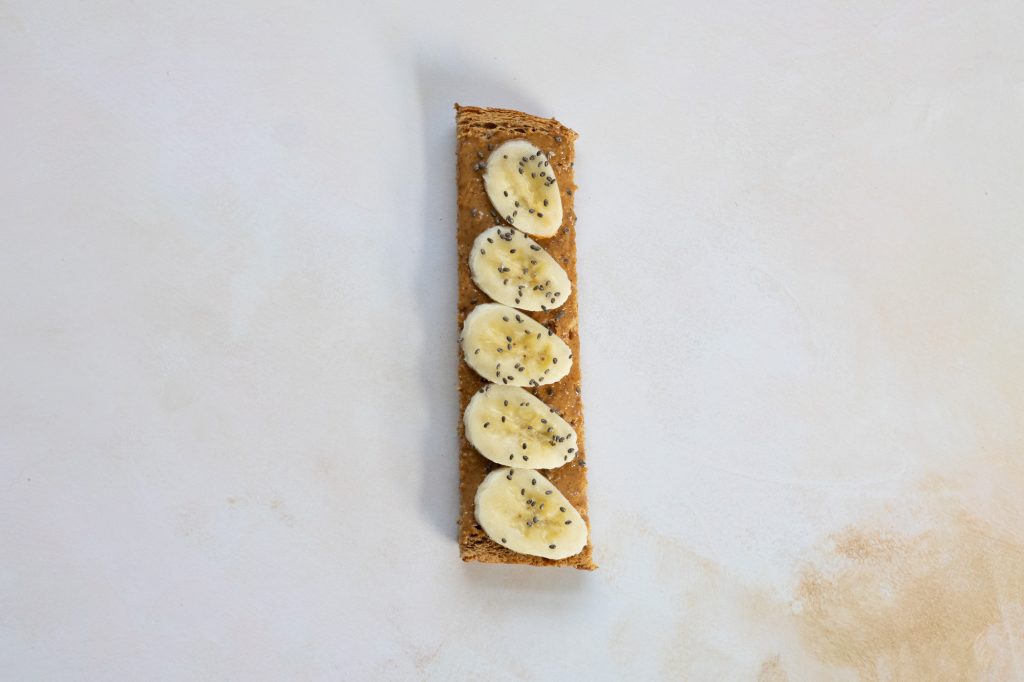
Choose smooth peanut, cashew, or almond nut butters with no lumps, and avoid crunchy peanut butters. For seed butters, look out for smooth sunflower seed or pumpkin seed butter.
Always choose 100% nut butters, as these have no added sugar or salt and make the healthiest choice for your baby.
Use just a tiny scrape, as nut butters spread thickly or in inconsistent globs can pose a choking hazard.
Eggs
Offer eggs hardboiled, scrambled, mashed, or cut into strips on toast. Eggs are nutritional powerhouses, and are packed with protein, and vitamins such as A, D, and B12.
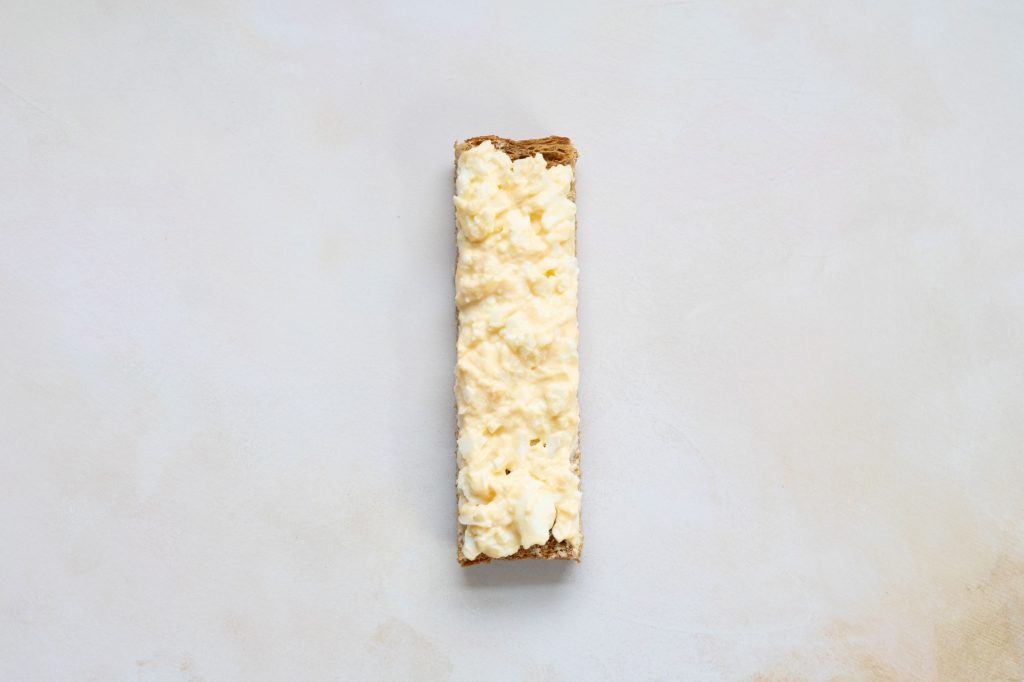
They support brain health thanks to choline, and can be an important source of iron for your baby.
Avocado
Perfect for smashing into toast and serving either chunky or smooth, this popular adult toast topping is actually perfect for babies, too!
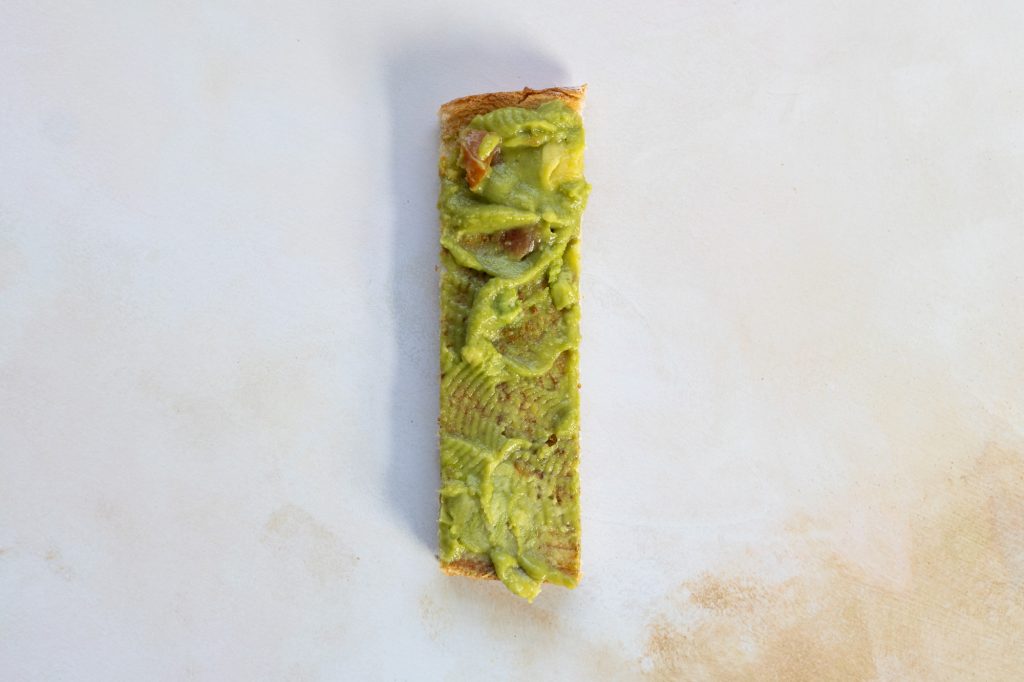
Expect a good dose of healthy fats along with vitamins and fibre for your little one. Use a little lemon juice to prevent avocado from browning too quickly.
Tahini
This sesame seed paste is packed full of healthy fats and minerals such as copper, selenium, and iron.
Use just a tiny scrape, as it can be quite strong-tasting and has the same consistency as peanut butter. Because of this it needs to be used sparingly to avoid posing a choking risk.
Cheese
There are so many amazing cheeses to try with your little one! Go for regional cheeses like Cheddar or Wensleydale, or you can also try goats’ cheese.
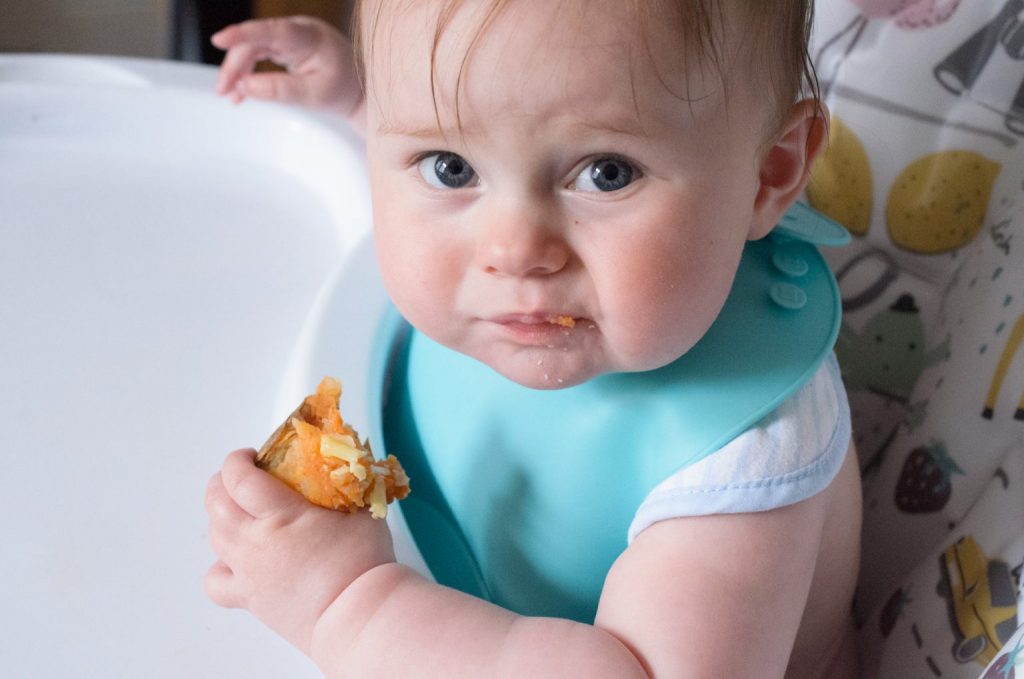
Cream cheese is one of the most widely available cheeses, and goes well with so many other toppings, however it does contain added salt. Ricotta cheese and cottage cheese are also tasty cheese toppings that go well with sweet fruits and berries.
The main consideration with cheese is the salt content. My recommendation is, as always, to look for the lowest salt cheese available. For your baby, you can use cheese sparingly, and balance salt content out at other mealtimes.
Fruit Toast
Your baby will be in fruity heaven with any kind of fruit on toast! You can mash and smash strawberries, raspberries, or blueberries to use as toast toppings.
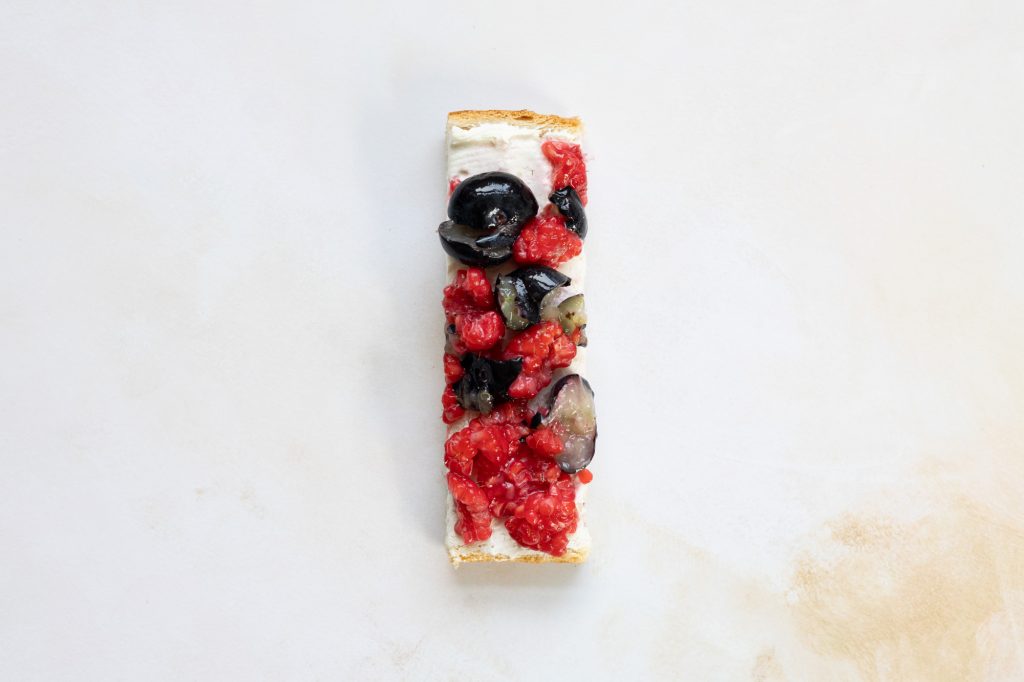
Frozen fruit can be really helpful here, since it has lost some of its firm texture and sticks well to toast.
Fruit is full of goodness for your little one—they’ll be getting vitamin C, fibre, and minerals like manganese and potassium.
Fruit Spread
Fruit spread is a bit like jam, but made with no, or less, added sugar. Be sure to check the labels first to find something you’re happy with.
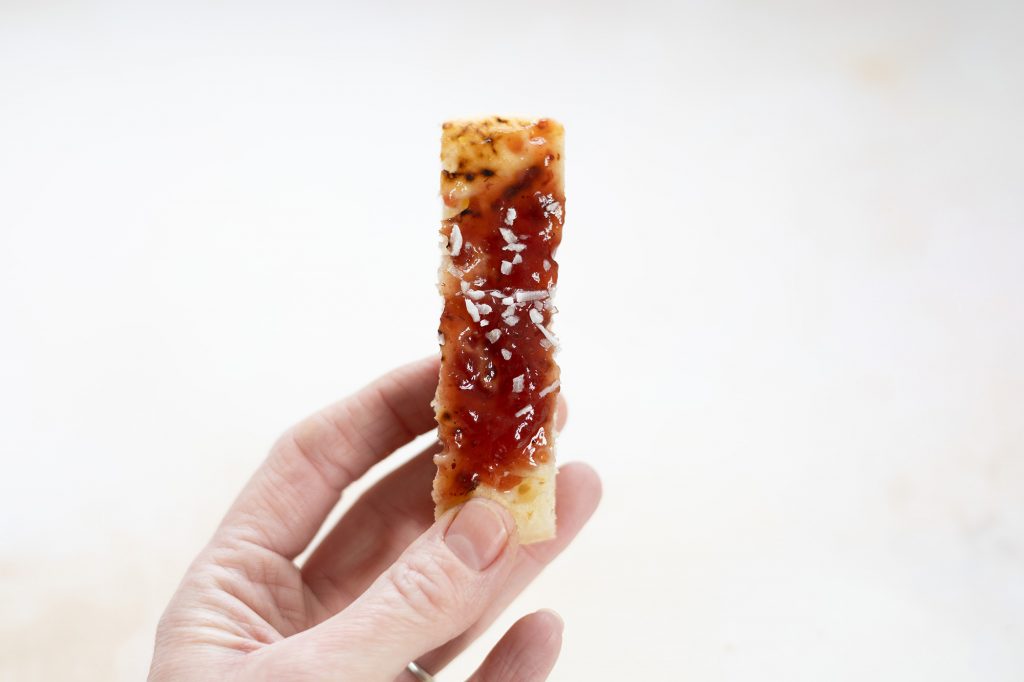
Bear in mind that fruit spreads are concentrated and still quite high in natural sugar. While they are delicious, some people might choose not to offer them to avoid reinforcing their baby’s natural preference for sweet foods.
Babies really are quite happy with the sweetness of foods from nature, like whole fruit. That said, jam is a fun and familiar food!
Bananas
Bananas have to be the ultimate toast topping for babies! Whether they are mashed or sliced on toast—I don’t know a baby who doesn’t like bananas!
Top tip: serve bananas on toast straight away before they start to brown, or add a squeeze of lemon juice.
Whole Milk Greek Yogurt
I use a lot of Greek yogurt in my toast for babies’ suggestions. This nutrient-dense, high-protein, and probiotic-rich food helps grow healthy babies!
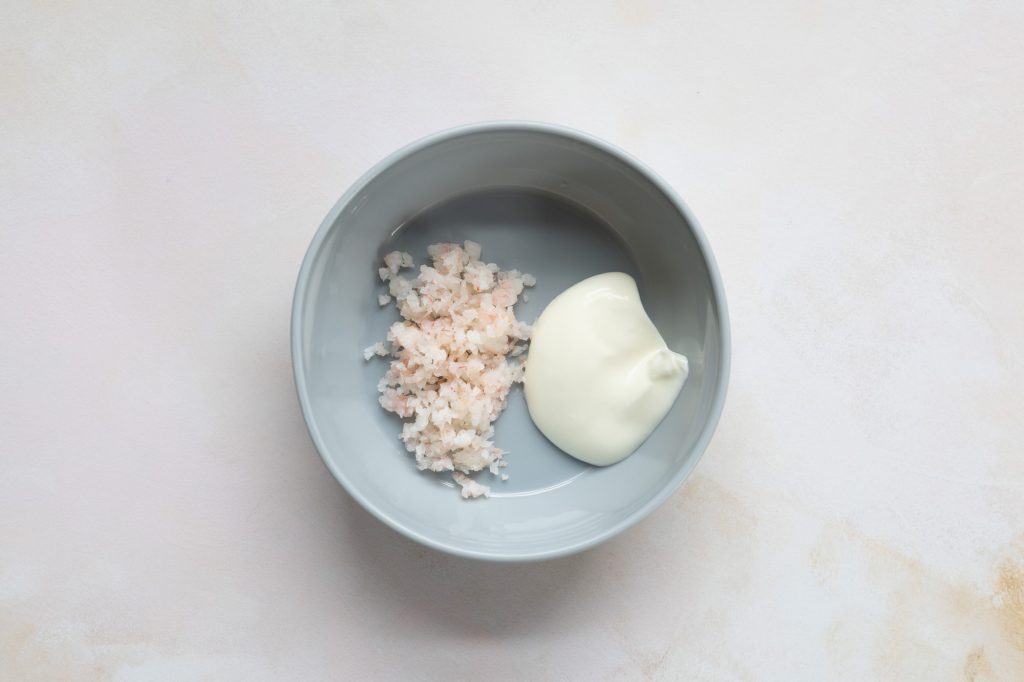
Versatile, and delicious, it’s one of my favourite foods for kids. It’s the perfect substitute for high salt condiments that aren’t suitable for babies, such as mayonnaise, salad dressings, and salad cream.
It’s particularly helpful for toast because it helps toppings to stick together, plus it binds flaky and grated toppings together. Perfect to help your baby to eat some tuna or cheese!
Another reason I love Greek yogurt is that it makes an awesome toast dipper! Just mix it with other foods to make all kinds of dips. For instance, add grated cheese for a cheese dip, with nut butter and some mild spice for a satay dip, etc. You can also add fruit purees or mashed fruit.
Creme Fraiche
If you don’t have Greek yogurt, then creme fraiche is also perfectly suitable! In fact, any plain yogurt or sour cream is fine for your baby.
Meat
Try these baby led weaning friendly toppings for toast:
- Soft, slow-cooked beef
- Lambs’ liver pate
- Mashed minced beef
- Minced or finely shredded chicken
We like to crumble some leftover turkey meatballs on top of toast and serve it with a little tomato salsa.
Fish
Fish is a nutritious choice for your baby. Tinned fish makes a really good choice for toast toppings. Canned fish is softer and easier to eat than fresh, and the canning process means you don’t have to worry about hard bones, since they become soft and edible.
- Tuna in spring water or sunflower oil
- Sardines
- Mackerel
When it comes to toast, try mashed tuna with Greek yogurt and a little melted unsalted butter to make a “pate”. Try canned sardines and canned mackerel, but check the salt content of tinned fish before serving, and choose no added salt varieties. Look for fish canned in water or oil, not brine.
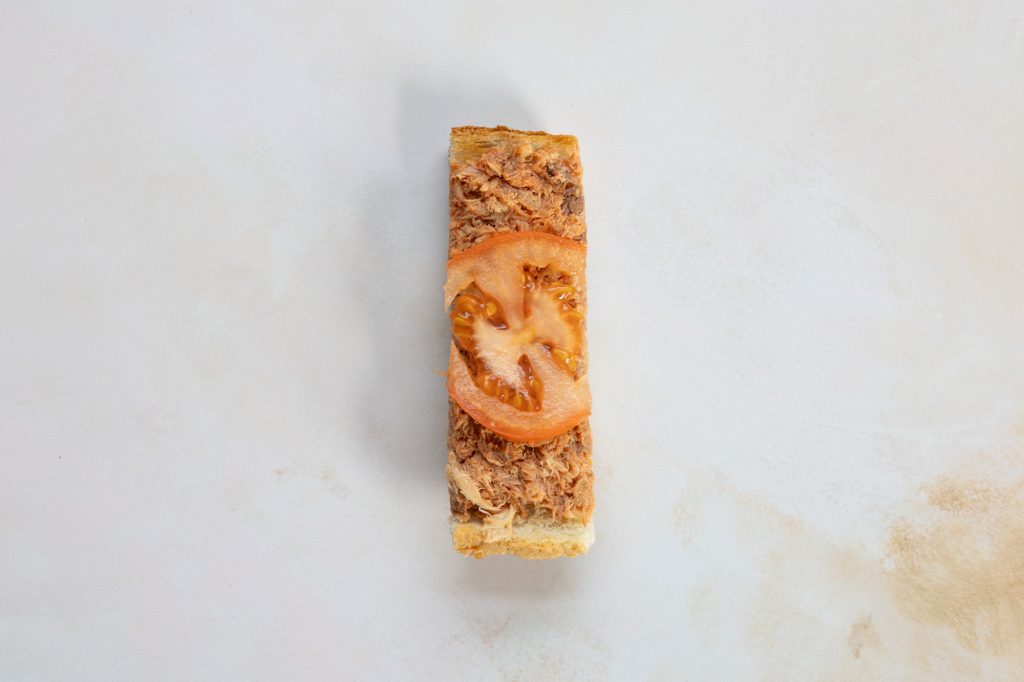
Sardines are a nutrient-dense source of Omega-3s, iron, zinc, and Vitamin D. You can buy mackerel in spring water from Tesco that has no added salt.
Beans
Mashed beans make the most amazing toast topping! There are many different types of beans to choose from, and they’re all packed with nutrition.
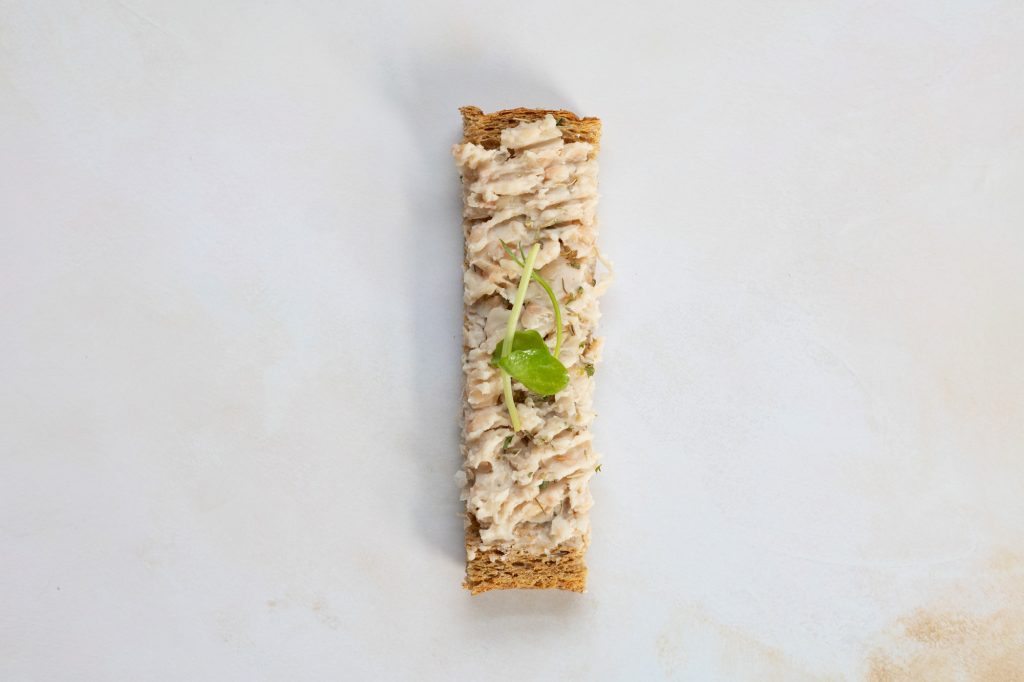
They’ll provide your baby with iron, zinc, protein, fiber, folate, potassium, and magnesium, which are essential for their healthy growth, immunity, and energy.
If you’re from the UK and you love baked beans, you can use reduced salt and sugar baked beans in tomato sauce, or you can make your own using haricot beans and tomato puree.
Don’t just stick to haricot beans, you can make all kinds of bean paste using kidney beans, pinto beans, etc.
Apple*
Whole apple is a healthy fruit but it must be served in the correct way for babies since it poses a choking risk. At 6 months old, half the apple and soft cook it. From 9 months, you can thinly slice it. Applesauce for your baby should be sugar and salt free. More info on serving apples, here.
Sweet Potato
Roast slices of sweet potato and serve them on top of toast with a sprinkle of cinnamon, with some ricotta or cream cheese for creaminess.
Cucumber
Cucumber toast is so refreshing—just top some toast with grated cucumbers or baton cucumbers. You can spread some cream cheese on the toast first to help the cucumber stick and create an interesting combination of flavours and textures for your baby. Add a sprinkle of fresh dill for a taste explosion!
Houmous on Toast
Houmous is a classic healthy toast topper and dip. Houmous makes a really balanced meal when paired with toast—providing fibre, protein, and healthy fats. Look for low salt varieties, or make your own.
Pesto on Toast
Pesto is such a yummy topping for toast. Make your own to control the salt levels. You could pair it with some tomato strips and a little grated cheese for a taste of Italy!
Condiments
Most condiments are not safe for babies due to the high levels of salt and sugar they contain. Instead, use butter, Greek or plain yogurt, tomato puree, applesauce (no sugar) to add moisture. To add flavour, use dried or fresh herbs, lemon juice, or mild but fragrant spices.
Did you know that babies can have gravy too so long as there’s no salt whatsoever added?
Step By Step To Make Baby-Led Weaning Toast
You can make toast for babies in just a few simple steps.
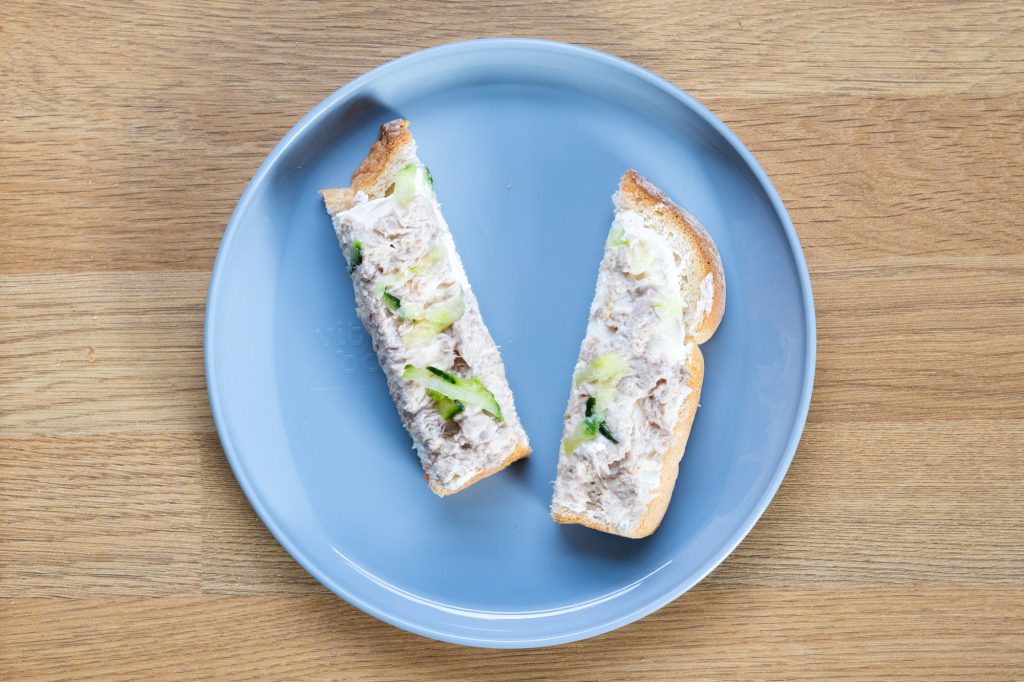
Let’s look at how to safely prepare toast dishes for your baby.
- Lightly toast the bread so it’s not floppy and is less likely to ball up and stick to the roof of your baby’s mouth.
- Let the toast cool a little.
- Cut the toast into appropriate size slices for your baby to be able to grasp. A good measure is the width of two fingers wide.
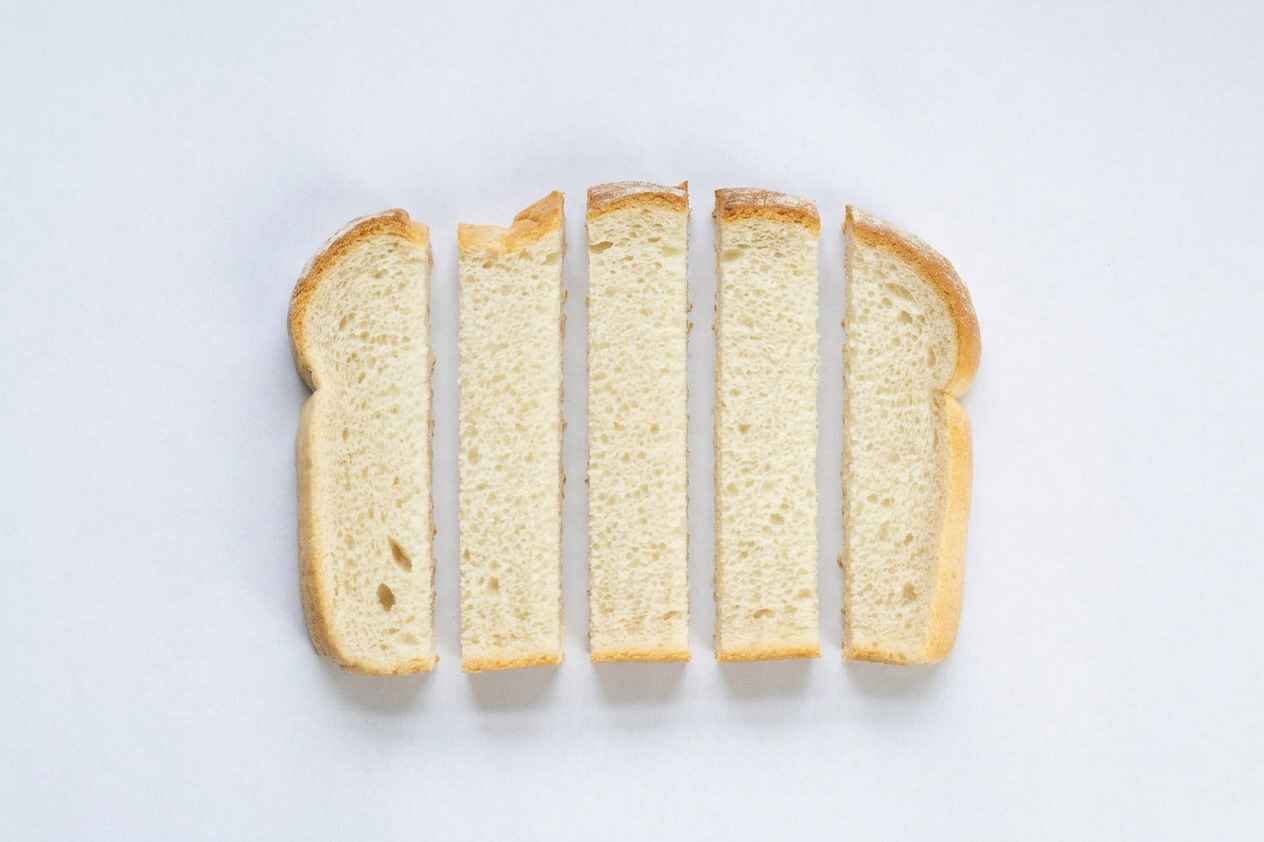
- Spread on a thin layer of topping. Remember to only use a scrape of peanut butter-type toppings, and to avoid big globs which can be a choking hazard.
- Remember to always sit with your baby while they eat.
Now let’s look at some tips to help you get the most out of toast!
Can I Freeze Toast?
Yes, you can freeze toast. But personally, I wouldn’t freeze it, since it’s so quick and easy to prepare.
This said, if you want to get a head start on the week with a little meal prepping, then get some toppings ready and store them in the fridge, airtight and covered, for up to 3 days. This includes things like chopped fruit, cheese, etc.
If you do decide to freeze a toast dish, ensure the food has fully cooled before popping it into a freezer bag. Make sure the bag is labelled and dated, so it’s easy to recall.
Use the toast dish within 1 month, and remember that you can’t re-freeze defrosted food.
When it comes to reheating the dish, make sure it is fully defrosted before reheating.
Now, to the ideas!
100+ Ideas for Baby Led Weaning Toast
Breakfast Toast Ideas
Whether you go for sweet or savoury toast toppings for your baby, or a mix of both—try these breakfast toast ideas to get their day off to a great start.
Nut Butter:
- Peanut butter & “jam” toast: with no added sugar fruit spread on white toast.
- Almond & raspberry toast: white toast with almond butter, and a few raspberries.
- Cashew toast: Crunchy wholemeal toast with cashew nut butter.
- Sunflower seed butter & bananas: finely sliced on wholemeal toast.
- Peanut butter & bananas: finely sliced on crumpet fingers.
- Blueberry peanut: soft white toast with smooth peanut butter and smooshed blueberries.
- Tahini & cucumber: on sourdough toast.
- Almond butter & chia seeds: on pitta fingers.
- Pumpkin seed butter, shredded coconut & blueberries: on white toast.
Eggs:
- French toast: made the way you like it and cut into fingers for your baby.
- Pink French toast: made by mixing raspberries into the egg mixture before cooking.
- Scrambled egg on wholegrain toast: with a sprinkling of cress.
- Soft boiled egg: gently mashed to top brown toast.
- Pureed egg: used like a spread on white toast.
- Soft cooked egg & avocado: white toast with strips of soft cooked egg and mashed avocado.
- Egg-in-the-hole toast: in wholemeal toast cut into strips.
Cheese:
- Melted Cheddar cheese: on sourdough toast.
- Melting Cheddar cheese & baked beans: low-salt/sugar beans and cheese on white toast.
- Wensleydale cheese & sliced nectarine: on toasted crumpet fingers.
- Fruit toast: with a generous spread of cream cheese.
- Cottage cheese & chia seeds: on toasted rye bread toast.
- “Cheese toastie” fingers: made with unsalted butter.
Yogurt:
- Greek yogurt dippers: dip their toast into plain Greek yogurt.
- Greek yogurt & fruit dippers: + fruit puree.
Fruit:
Use unsalted butter to stop the toast going soggy.
- Sliced banana cinnamon toast: smashed bananas on brown toast.
- Sliced banana cinnamon toast: + nut butters.
- Finely mashed bananas: on white toast.
- Berry toast: squished blueberries and raspberries on white toast.
- Strawberry toast: mashed strawberries over a cream cheese, on white toast.
- Kiwi & strawberry fruit spread: on white toast.
- Ricotta & pear: fresh ricotta cheese with sliced pears on white toast.
- Creamy mandarins: tinned mandarins with cream cheese and chia seeds on wholegrain toast.
- Fig: mashed and spread on white toast with a little cream cheese.
- Apple*: nutmeg, and unsalted butter.
- Applesauce: no added sugar applesauce on toast with unsalted butter.
- Fresh tomato: mashed fresh tomatoes on sturdy wholemeal sourdough toast strips.
- Canned tomatoes: warmed and served on sturdy pitta bread strips.
Fruit Spread Jam on Toast:
- Strawberry jam: low or no sugar fruit spread on toast.
- Apricot jam: on toast.
- Marmalade: on toast.
- Sweet baby fruit pouch: on toast (my youngest loves mango puree on toast!).
Now, let’s go to lunch and dinner!
Lunch and Dinner Toast Ideas
Here are plenty of lunch and dinner time ideas for baby toast. This is a great opportunity to get some protein and iron-rich foods into your baby (learn more about the importance of iron in your baby’s diet).
Eggs:
- Smashed egg, pesto & sliced tomato: on wholegrain toast fingers.
- Scrambled eggs, peppers & mushrooms: finely chopped soft veggies on wholegrain toast.
- Scrambled eggs & ham: a little finely chopped ham on white toast.
- Scrambled eggs & cheese: on wholegrain toast.
- Smashed egg, mushroom & spinach: on wholegrain toast.
- Curried egg: egg mixed with a little creme fraiche and no-salt curry powder, on white toast.
- Pureed egg & tomato slices: on white toast.
- Fried egg slices: on wholegrain toast.
- Spanish omelette: sliced into strips or crumbled on toast.
- Savoury French toast: made with a little cheese or finely sliced ham.
- Turkish eggs: made with peppers, onion, tomato and yogurt served on toast slices.
Cheese:
- Grated Cheddar cheese: melted or not, on white toast.
- Grated Cheddar cheese & finely sliced tomato: on wholegrain toast.
- Grated Cheddar cheese & apple*: on white toast.
- Grated Cheddar cheese & ham: cheese and finely chopped ham on brown toast.
- Grated Cheddar cheese & veggies: finely chopped soft onion or mushroom on wholegrain toast.
- Pizza toast: with cheese and finely chopped ham and pineapple.
- Cheese & tuna melt: with a blob of sour cream on wholemeal toast.
- Cold mozzarella & sliced tomato: on rye bread.
- Cottage cheese & pineapple: finely sliced and served on wholegrain toast.
- Creamy ricotta & finely chopped spinach: on brown toast.
- Welsh Rarebit: try this classic Welsh dish, adapted to suit your baby.
Liver:
- Lambs’ liver pate: made with pureed/mashed lamb liver. Serve this no more than once a week due to its high vitamin A content).
Beef:
- Soft, slow-cooked beef: mashed or pureed, served on white toast.
- Chilli beef toast: Soft cooked mashed minced beef with a little tomato and kidney beans.
Chicken and Turkey:
- Lemon chicken: minced chicken with a little Greek yogurt and lemon juice on wholegrain toast.
- Tarragon chicken: add tarragon to the above for a herby dish.
- Curried chicken: chicken, creme fraiche, and curry spices on white toast.
- Mediterranean chicken: chicken, olive oil, and mixed herbs on brown toast.
- Chicken avo: chicken, mashed avocado, and mixed herbs on toast.
- Homemade turkey meatballs: crumbled onto sourdough toast with homemade salsa.
- Chicken spread: made with pureed chicken and spread onto white toast fingers.
Fish:
- Creamy prawns: finely chopped prawns with creme fraiche and a squeeze of lemon on wholegrain toast.
- Tomato prawns: with Greek yogurt and tomato puree on white toast.
- Prawn avo: pureed avocado topped with finely chopped prawns.
- Tuna: tinned tuna mashed with Greek yogurt on white toast.
- Tuna & chives: top the above with finely chopped chives.
- Tuna & carrot: + grated carrot.
- Tuna & cucumber: + grated cucumber.
- Sardines: tinned sardines, mashed on wholemeal toast.
- Salmon spread: mashed tinned salmon mixed with Greek yogurt and lemon juice, spread on to pitta bread fingers.
- Salmon, flaked: fresh cooked or tinned salmon mashed into wholegrain toast.
- Mackerel & tomato: tinned mackerel, mashed with tomato puree and topped with finely sliced tomato white toast.
Beans and Lentils:
- Classic beans on toast: shop-bought low-salt/sugar canned baked beans on wholemeal toast.
- Homemade beans on toast: mash haricot beans onto toast topped with tomato puree.
- Beans and cheese on toast: add a little cheese to either of the above for a classic UK twist.
- Green lentils: with strips of soft roasted carrot and a little dried rosemary.
- Curried lentils: mix Greek yogurt and a little curry spice for a vegetarian “curry on toast”, use any sturdy bread.
- Chickpeas: mashed with a little melted butter and cumin on white toast.
- Houmous: use sourdough toast—add sliced tomatoes or cucumber.
- Haricot beans: mash with a little olive oil and some mixed herbs on sourdough toast.
- Butter beans: mashed with tomato puree spread on wholegrain toast.
- Butter beans: mashed with pesto on white toast.
- Black beans: mashed with smoked paprika on sourdough toast.
- Kidney beans: mashed with a little tomato puree on brown toast.
- Canellini beans: mashed with mixed herbs and little cheese on wholemeal toast.
- Refried beans: either homemade (or salt-free) with pitta bread toast fingers as a dipper/scooper.
Avocado:
- Guacamole: served on wholegrain toast fingers.
- Avocado: mashed with lemon juice on sourdough toast.
- Avocado: smooth and spread on white toast.
- Avocado & tuna: with tuna on white toast.
- Avocado, tomato & cheese: on wholegrain toast.
- Avocado & black beans: add a little coriander/cilantro, on pitta toast.
- Avocado handles: served on white toast.
Pesto Pockets:
- Pesto pockets: use pitta breads and low-salt pesto sauce (homemade) with cheese, cut into slices for your baby, and served cooled.
Sweet Potato Toast:
- Sweet potato spread: pureed sweet potato spread on wholegrain toast.
- Sweet potato slices: roasted slices of sweet potato with cinnamon and ricotta on crunchy white sourdough.
Soup:
- Soup scooper: Use toast fingers to scoop and dip soup without a spoon.
Stew:
- Stew scooper: Use toast fingers to scoop stew without a spoon.
There are so many ideas here! And I bet you can add many more. Do you want a downloadable and printable version?
Sources:
- Food allergies in babies and young children: (https://www.nhs.uk/baby/weaning-and-feeding/food-allergies-in-babies-and-young-children/)
- Introducing foods that could trigger an allergic reaction: (https://www.nhs.uk/best-start-in-life/baby/weaning/safe-weaning/food-allergies/)
- Are There Sensitive Periods for Food Acceptance in Infancy? (https://link.springer.com/article/10.1007/s13668-017-0203-0)
Final thoughts on Baby-Led Weaning Toast
Toast is such a fun and comforting food that has sustained babies for generations. And with the right toppings and choice of bread it is a safe and nutritious food for your baby. I hope you found lots of baby-led weaning toast ideas for your baby in this post. Let me know what you think on my Facebook page.
Remember to subscribe to my newsletter to stay in touch.
Disclaimer: I’m currently working towards a Nutrition Certification, but I’m not an expert in child nutrition (just a mum of four). Remember to consult your doctor or paediatrician before starting your weaning journey or making significant changes to your baby or child’s diet.
Until next time!
Helen



Comments are closed.